
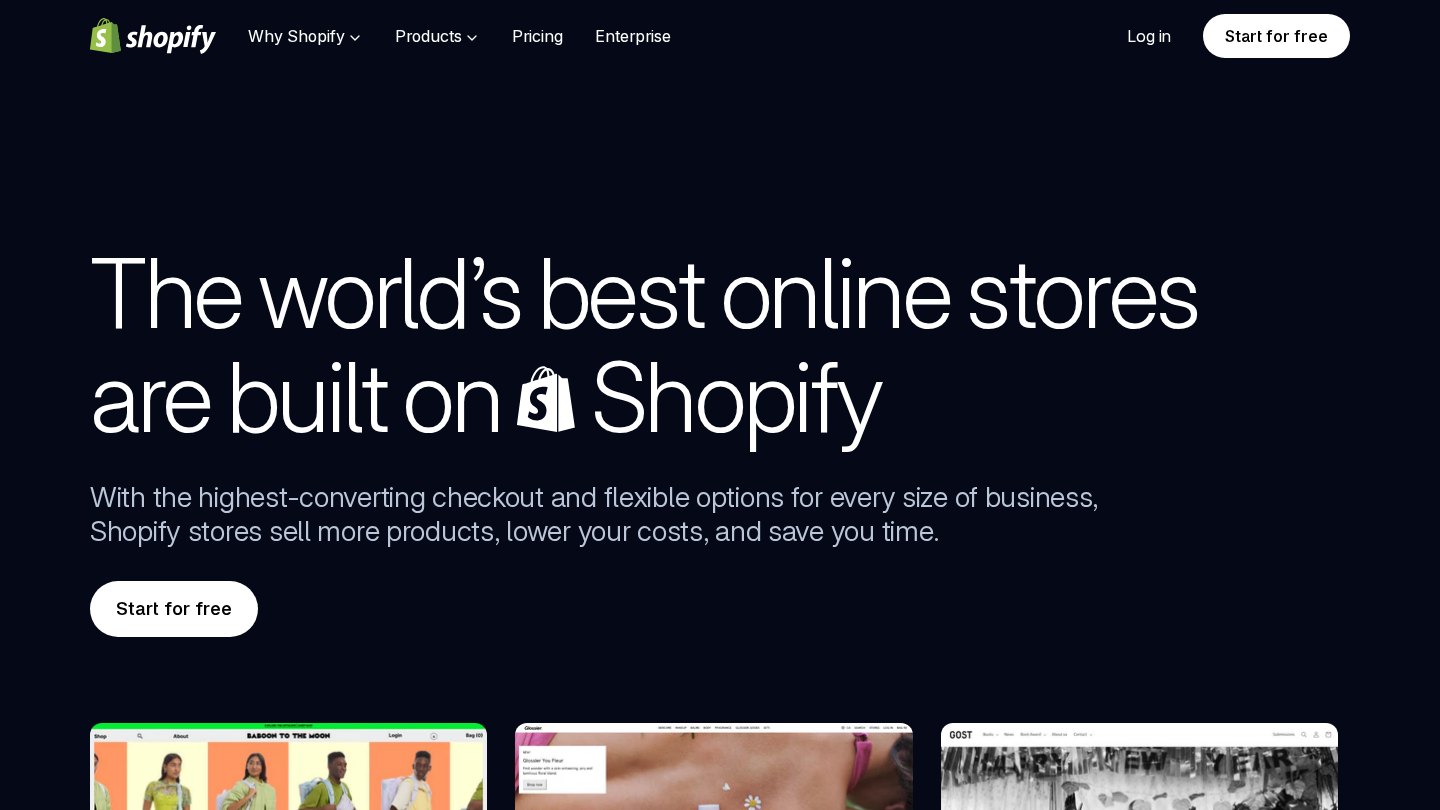
Shopify is a sensible starting point for merchants who want a hosted store rather than a website-infrastructure project. This review explains where that convenience helps, where costs and platform constraints need closer attention, and how to decide whether it fits your selling model.
This assessment is based on the vendor's official documentation and public information as of October 2026; we have not run our own hands-on tests.
Is Shopify a Fit for Your Online Store?
Shopify belongs on the shortlist when your priority is running an online retail business without managing the underlying hosting yourself. Its storefront, checkout and commerce tools offer a coordinated starting point, but the right choice depends on payment availability, required workflows and total operating costs. Treat it as a strong candidate, not an automatic answer for every merchant.
What it is and what you are buying
Shopify is a hosted commerce platform for creating and managing a store. Its official pricing page describes the storefront and selling features packaged across its plans. You are buying an ongoing service, not simply downloading store software to run on a server you control.
That distinction changes the work involved. Instead of selecting and maintaining each infrastructure component separately, a merchant configures the platform, selects a design and establishes products, payments and fulfilment processes. The merchant still owns the business decisions and must check that the resulting store behaves correctly.
Hosted does not mean finished. Product information, photography, tax settings, delivery promises, returns policies and customer support still need attention. Shopify can provide the framework for a transaction without deciding whether your product descriptions or shipping rules are appropriate.
The practical question is whether the packaged approach removes more work than it creates. For a conventional retail catalogue, that may be an attractive trade. For a business with unusual ordering rules or deeply customised account relationships, the fit needs a more detailed demonstration.
Key features: evaluate the whole order journey
Start with the customer's journey rather than an isolated feature checklist. Can a shopper find the right item, understand its variants, see a credible delivery promise and complete checkout using an acceptable payment method? Then follow the same order into fulfilment, customer service and reporting.
Shopify's plan comparison provides a useful starting inventory of selling, checkout and operational capabilities. Availability and packaging should be checked for your country and chosen plan. A capability shown in a product demonstration may depend on an additional service or a configuration you have not yet priced.
| Area | Potential benefit | What the merchant should verify |
|---|---|---|
| Storefront | A coordinated way to present products | Theme behaviour, navigation and accessibility |
| Checkout | An integrated purchase journey | Payment methods, markets and required rules |
| Catalogue | Central product administration | Variants, imports and merchandising needs |
| Operations | Tools around orders and fulfilment | Returns, stock updates and warehouse workflow |
| Extensions | A route to additional functionality | Fees, permissions and support ownership |
| Team use | Delegated operational work | Appropriate staff access on the selected plan |
Treat the table as an evaluation worksheet, not a claim that every feature is included in every subscription. Ask for a demonstration of your specific workflow before assuming the platform handles it without an extension.
A store with multiple sales channels should also agree where the authoritative inventory record lives. The important outcome is dependable stock and order handling, not merely seeing several channel names in a dashboard.
Who it is for, and its main strengths
Shopify is most compelling for merchants who value a packaged operating environment. A small team may prefer spending time on products and customer acquisition rather than choosing hosting infrastructure and coordinating separate commerce components.
Its main strength is this concentration of responsibilities in one commercial platform. The official plan page brings together the core store offering and options for businesses at different stages. That can simplify initial evaluation, although it does not eliminate the need to understand add-ons and payment costs.
For a growing brand, consistency can matter as much as setup convenience. A documented process for updating products, reviewing orders and controlling staff access can be easier to sustain than a collection of individually chosen tools. Whether Shopify supplies that benefit in practice depends on the workflows you adopt.
It is less useful to describe Shopify as “for beginners” than to describe the trade it offers. Experienced merchants may also value hosted operations, while a first-time merchant with unusual requirements may need substantial specialist assistance.
Do not confuse suitability with a guaranteed launch deadline. The store software may be available quickly, but accurate product data, approved payments and dependable fulfilment can take longer. A realistic launch plan includes those dependencies.
Limitations and risks to examine before committing
A hosted platform has boundaries. Before purchase, identify which checkout, account and ordering behaviours are essential and confirm how the selected plan supports them. If the answer requires an extension or custom development, include that dependency in the decision.
Extensions can also distribute responsibility. When a promotion behaves incorrectly, the cause might be a theme setting, an application or the interaction between several tools. Establish who investigates problems and who can safely change the store.
Portability deserves its own review. Ask what product, customer, order and content data can be exported, in which formats and with which exclusions. Do not assume that exporting records recreates the appearance or business logic of a working store on another platform.
Avoid unsupported performance promises. This review has not established how a particular theme, application combination or traffic pattern performs. Evaluate representative pages and checkout paths with your intended configuration rather than relying on generic claims about speed or scale.
The same caution applies to support. Confirm available channels, entitlement and escalation procedures in the current offering. Do not interpret the existence of support as a guaranteed resolution time for a business-specific integration problem.
Pricing approach: budget for the store, not just the plan
Shopify presents multiple subscription levels on its official pricing page. This review intentionally avoids quoting amounts or transaction rates because local currency, billing period, payment arrangements and current terms can change the relevant figure. Use the page for your market and check the final terms before subscribing.
Separate the platform subscription from payment processing, any applicable platform transaction charges, paid themes, applications and professional services. These are different categories; a change that removes one fee does not necessarily remove another.
In particular, do not assume that using a particular payment arrangement makes every transaction free. Confirm eligibility, processing charges and any additional charges against the current official offer for your location and chosen plan.
Here is a worked example using entirely hypothetical numbers. A merchant budgets 50 currency units for the platform, 35 for applications and 115 for monthly design and operational assistance. Its recurring store cost is 200 units before payment processing, fulfilment, advertising and taxes.
If another plan saves a hypothetical 30 units in other monthly charges but raises the subscription by 60, upgrading increases net costs by 30 unless an additional capability provides value. This is a decision method, not a description of Shopify's actual charges.
Build a launch budget and an ordinary operating budget separately. Include time for product preparation and staff training even if the owner does that work personally. A low subscription figure cannot by itself establish whether the business is economical.
Alternatives and a practical decision exercise
Compare Shopify with approaches rather than assuming a rival is automatically cheaper. A self-managed store can offer more control, but the comparison must include hosting, maintenance and technical responsibility. A simpler hosted website may suit a very small catalogue if its selling and fulfilment tools meet the actual need.
A custom commerce system is another category, not an automatic upgrade. It may justify its cost when essential business rules cannot be supported acceptably elsewhere. It also needs an owner for maintenance, changes and incidents.
Use a representative basket of products and a complete order scenario to make the decision. Include a variant, a discount, a shipping restriction and a return. Use the same scenario for every option so the comparison stays grounded in work the business must actually do.
Why: A polished demonstration can hide operational gaps. How: Ask the person who will run the store to complete the scenario, record any manual interventions and identify every paid dependency. Then have someone other than the implementer explain the workflow back.
Shopify is a good fit when that exercise confirms the required journey with acceptable costs and manageable complexity. It is a weaker fit when essential behaviour depends on fragile workarounds or a level of customisation the business cannot sustain.
Questions About the Shopify Review
Does Shopify remove the need for a developer?
Not necessarily. A straightforward store may need less specialist help than a complex one, but unusual integrations or design requirements can still require professional work. Establish the scope before budgeting for implementation.
Is a free or lower-cost store platform necessarily cheaper overall?
No. Compare the complete operating model, including maintenance and staff time. Conversely, do not assume Shopify is cheaper simply because it bundles services; the answer depends on the store's requirements.
Should I buy a paid theme before validating the store?
First confirm that the design supports your product information, navigation and purchase journey. A theme purchase should follow a clear requirement, not substitute for deciding what customers need to see.
What should I check before migrating an existing store?
Map products, customer records, order history, redirects, integrations and open fulfilment work. Confirm what transfers cleanly and plan how customers and staff will handle the transition. Keep a rollback or contingency plan appropriate to the business.
Judge Shopify by Your Store Needs
Shopify earns consideration because it packages many store responsibilities into a hosted service. It should win your decision only when the actual order journey, operating budget and required flexibility fit—not because it appears to be the default choice.
Next steps: Browse the eCommerce hub for related guidance, then return to this Shopify review with your workflow checklist and budget assumptions.
Sources
- Shopify — Shopify pricing and plan comparison
- Shopify — Shopify
This review is general information, not professional advice. Features and prices change; check the vendor's site.
Pros
- Hosted store builder with no server setup
- Large app ecosystem for extra features
- Built-in payments and checkout
Cons
- Extra transaction fees when not using Shopify Payments
- App subscriptions can add up as a store grows